Roots, Rise, Glory: 1886-1945
Roots, Rise, Glory: 1886-1945
From Humble Beginnings to Global Adventures
The story of Motherwell Football Club begins not on a grand stage, but in the back room of a local tavern. On a spring evening in May 1886, a group of men met at Mrs Baillie’s establishment on Merry Street with a vision – to create something lasting, something local, and something special. Out of that meeting, under the auspices of Alpha FC – product of the1885 amalgamation of Wee Alpha and Glencairn – Motherwell Football Club was born.
The club’s first match came just five days later – a 3:2 victory over Hamilton Academical on a patch of land near Roman Road. There were no stands, no turnstiles, no entry fees – just a love of the game and a desire to play it. Early players like Jock McPherson and Thomas Murray helped shape the club’s pioneering spirit, and within a year, a bold change of colours saw the team swap their blue and white for striking black and gold – hues that would define the club’s early identity.
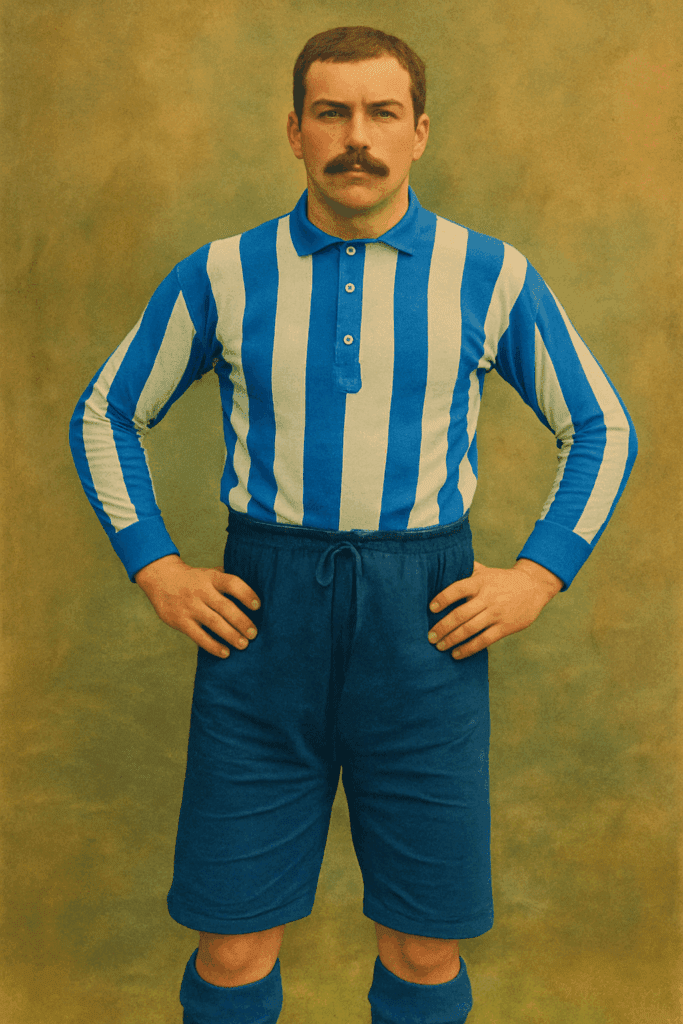
Motherwell FC Blue and White Kit 1885-1891
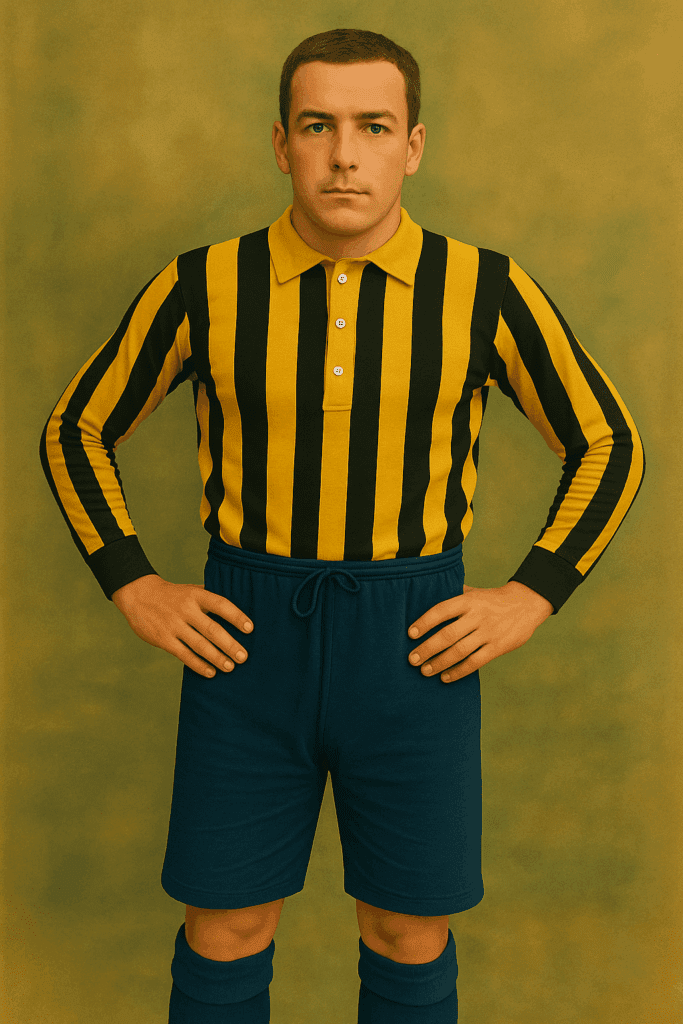
Motherwell FC Black and Gold Kit 1891-1893
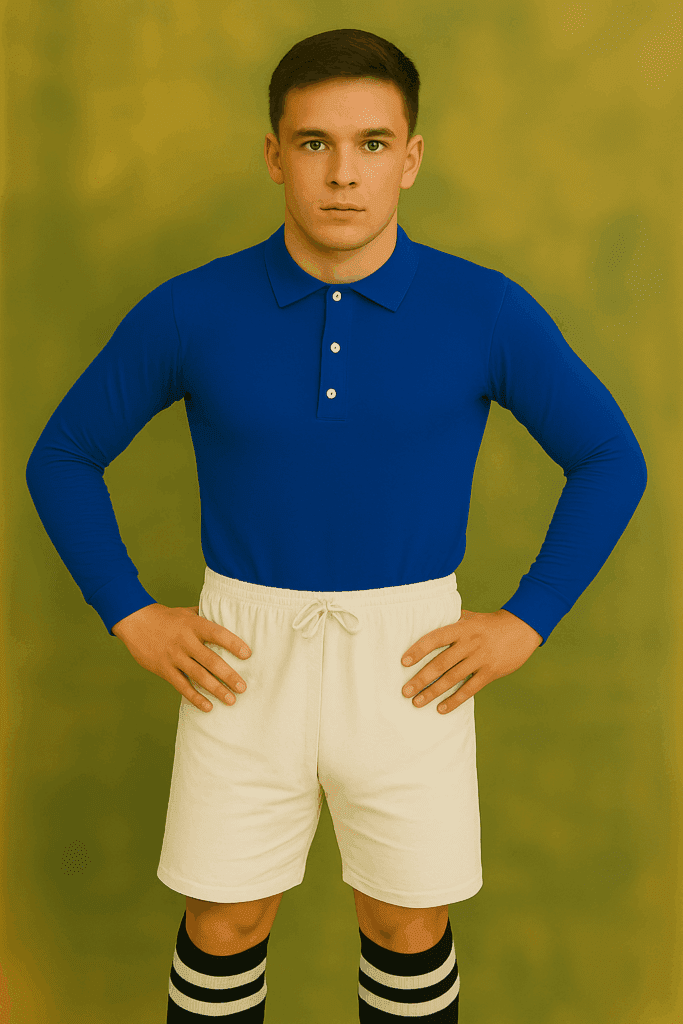
Motherwell FC Blue Kit 1893-1913
By the late 1880s, change was afoot. As the sport itself became more organised and competitive, so too did Motherwell. In 1889, the club moved to Dalziel Park, where crowds began to grow, and with them came the need for more formal facilities — culminating in the opening of the first grandstand in 1890. Though modest, seating around 250, it marked a significant step in the club’s evolution.
That same year, hints of professionalism began to reach Motherwell. Offers came in from English clubs, including Manchester West, for players like goalkeeper Willie Sneddon, and by 1893, Motherwell joined the newly formed Scottish Football League Second Division – making the leap into professional football. Their debut league match against Clyde at Dalziel Park, ended in a convincing 4-1 win, and the ‘Well were officially on the national stage.
Professionalism brought change – new kits (including a one-season stint wearing maroon jerseys and sateen knickers, the club’s first paid players, and the first proper facilities, including baths in the clubhouse. Admission was sixpence for adults and tuppence for boys, with season tickets offering even better value. Note that the reduced price was for boys!
For context, accounting for inflation some 130 years later, these prices are equivalent to 13p for adults and 5p for juniors. Back in the late 19th century, workers in Motherwell earned between £1 and £3 per week, compared with the 2025 average salary of £576 per week.
From muddy fields and second-hand kits to professional contracts and packed terraces, the early years of Motherwell FC are a testament to what determination, community spirit and a love of the beautiful game can achieve.
This was a period of building – not just of grounds and teams, but of reputation, resilience and tradition. And it’s those very foundations that still underpin the club today.
The Turn of the Century: From Dalziel to Fir Park (1894–1912)
The years leading up to 1945 saw Motherwell develop from a local side into an established name in Scottish football. While that story continues in subsequent chapters of the club’s history, the groundwork laid in these early decades was vital. The identity of the club – its deep community roots, its ambition, and its grit – was forged in these formative years.
By the mid-1890s, change was in the air for Motherwell Football Club. Having worn their traditional blue and white stripes since the club’s formation in 1886 until 1891, followed by black and gold or blue top, they still called Dalziel Park home. But behind the scenes, the committee was already thinking ahead. The club’s growing popularity and ambition demanded something more permanent, more befitting of a team with First Division aspirations.
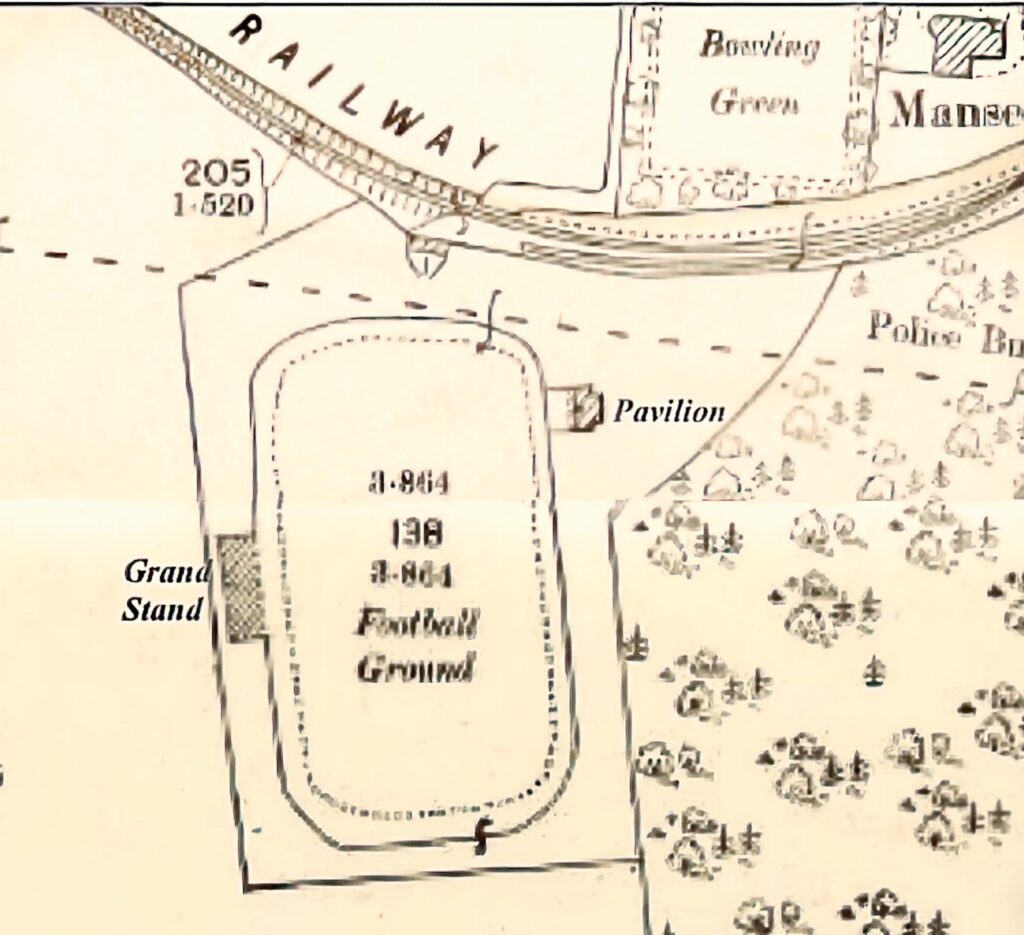
Location of Fir Park - and the old rail line by the bowling green.(by permission of the National Library of Scotland)
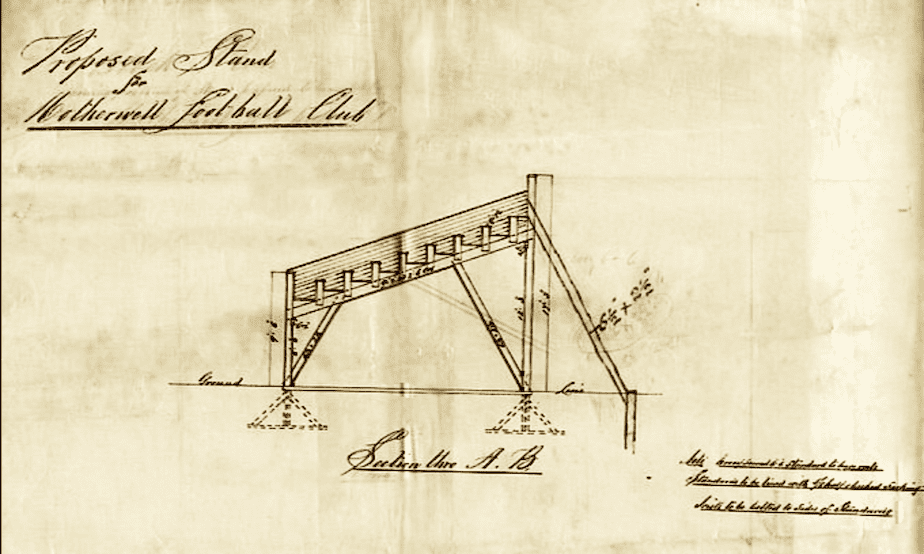
Drawing of proposed stand at Fir Park for Motherwell FC (MFC HT Collection)
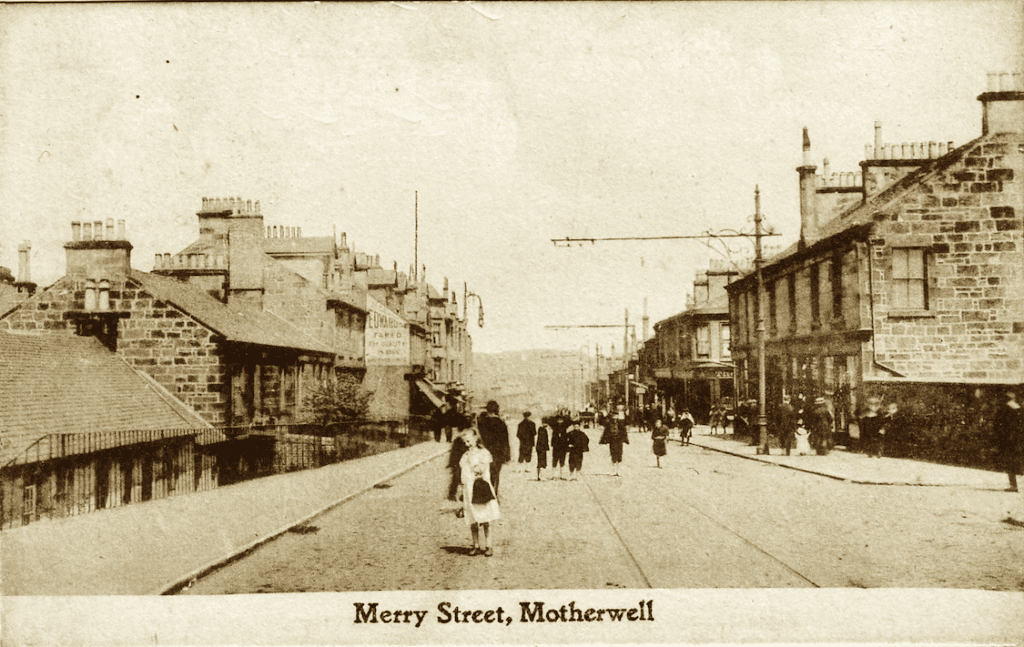
Merry Street, Motherwell, c1900 - near the location of Mrs Baillie's Bar (MFC HT Collection)

The corner of Fir Park Street and Edward Street, Motherwell, c1910 (Club Historian Personal Collection)
In 1895, the club moved again – this time to a purpose-built ground close to Manse Road. The new stadium, known as Fir Park, would become the club’s permanent home. Complete with press boxes, turnstiles and a grandstand capable of holding 600, it was heralded as one of the finest grounds in the west of Scotland. A new ground and a new kit, with the club switching to pale blue shirts and white knickers.
On 31 May 1895, ‘Well bid farewell to Dalziel Park in style, trouncing Royal Albert 5:0. It was a symbolic end to an era and the beginning of a bold new chapter. Already, The Motherwell Times had reported in October 1894 that the new ground on Manse Road was progressing, albeit not quite ready. The club committee, showing notable foresight, had opted to turf the pitch properly, even if it meant the ground wouldn’t be playable that season.
The plans, courtesy of local architect Mr W. L. Dyer, were ambitious: a proper entrance from Windmillhill Street, six pay boxes to prevent the usual crush at the gates, and a pavilion designed to be both functional and elegant, complete with a press verandah and bathing facilities – a novelty at the time. The playing surface itself was to be 111 yards long and 65 yards wide. Ringed by a cinder track, a substantial wooden rail would enclose both, whilst the whole field would be enclosed by a barricade.
This wasn’t just a move – it was a statement. Motherwell FC were laying the foundations of something lasting.
Baptism of Fire at Fir Park (1895–1898)
Fir Park’s grand debut came on 3 August 1895 with a glamour tie against Celtic. The scoreline, alas, was not in their favour: a humbling 8:1 defeat. It was an inauspicious beginning, but the home crowd didn’t have to wait long for a boost. Just four days later, Motherwell bounced back in emphatic style with a 7:2 demolition of Clyde. The new ground had its first victory, and Fir Park was beginning to feel like home.
These were turbulent years for many Scottish clubs, with the professional game in flux and competition fierce, especially in the west. Players came and went swiftly; Sam Lynch, a lively winger from Cowlairs, arrived in the summer of 1895 but moved on just a few months later. In Late August 1887 Jimmy Murray (brother of Thomas who appeared in the first Motherwell team) and James Cassidy were lured to Everton. Jimmy made the move 10 minutes before James.
Then, in 1898, Fir Park hosted a notable international fixture: Scotland 5:2 Wales, drawing a crowd of 7,000 and generating over £170 in receipts. It was a sign of Fir Park’s growing stature, capable now of holding centre stage on the national scene.
Qualifying Cup Glory & Colourful Protests (1901–1902)
Motherwell’s first major taste of silverware came in the 1901-02 season, winning the Scottish Qualifying Cup after a hotly contested replay against Stenhousemuir at Ibrox. It wasn’t just the result that captured attention – it was the fan protest. A controversial shift to maroon shirts had not gone down well with the support. Over 3,000 Motherwell fans descended on the match, many wearing blue cards in their caps as a subtle but pointed protest.
The message was clear, and the club listened. Motherwell reverted to their original blue colours the following season. At a time when club identity was still being formed, this was an early indication of how deeply the supporters’ voice mattered in shaping the club’s future – a century before fans, under The Well Society, became majority shareholders of the football club.
Sergeant-Major Quirk & the Soldier’s Discipline (1902–1914)
As the Edwardian era progressed, one of the club’s most significant early figures rose to prominence – Sergeant-Major Thomas J. Quirk. A former soldier with experience in the Black Watch and Highland Light Infantry, Quirk was more at home with a rugby ball or cricket bat, but he quickly took to football with military precision.
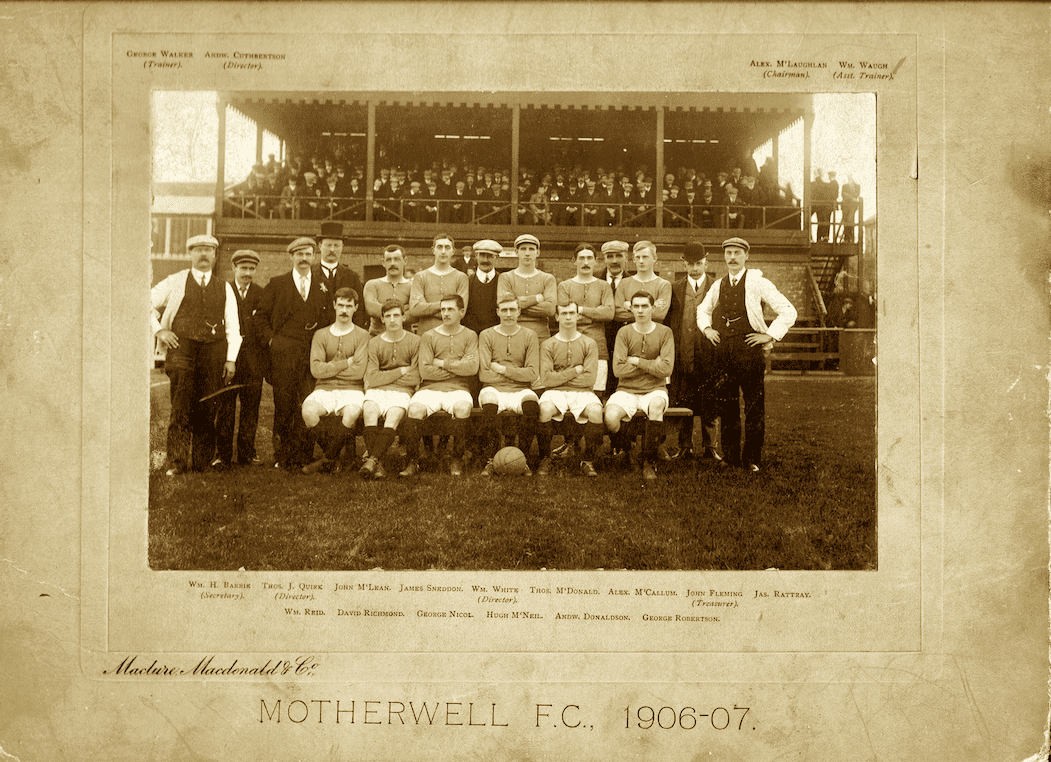
Motherwell FC Squad 1906-07 season (MFC HT Collection)
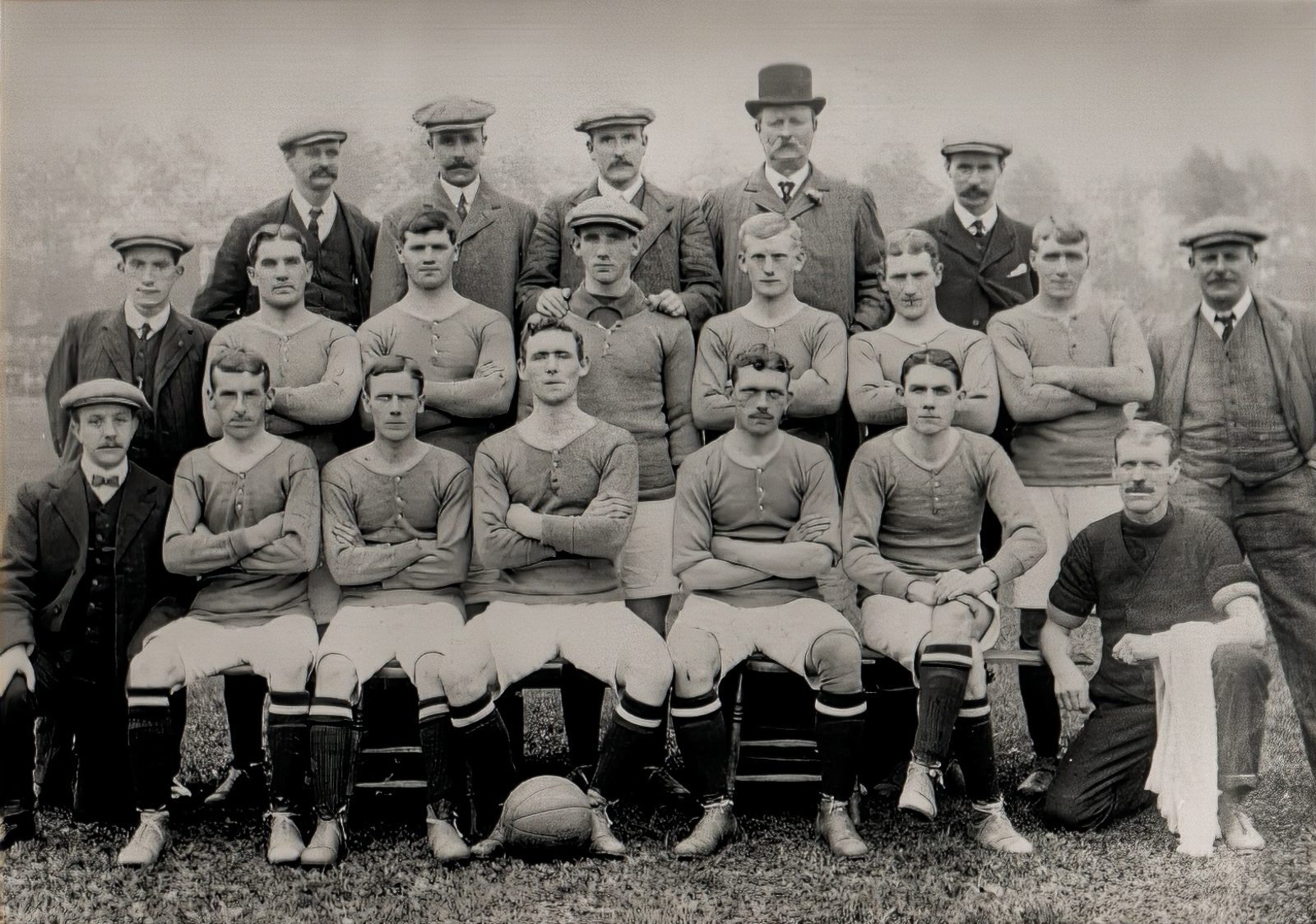
Motherwell FC 1909-10 (MFC HT Collection)
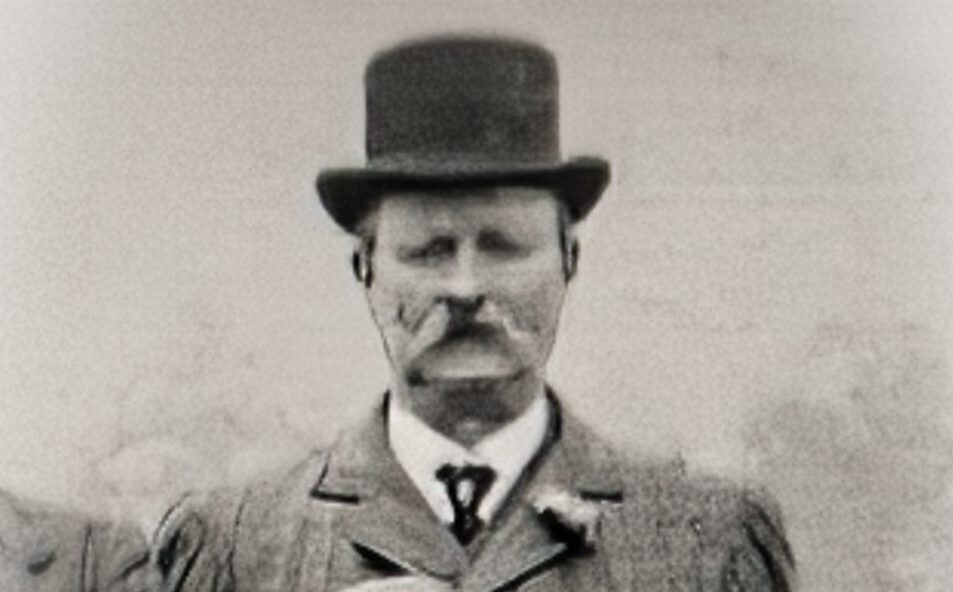
Sergeant Major Thomas Quirk (MFC HT Collection)
Becoming a committee member, then Vice-President, Quirk helped oversee the club’s transformation into a Limited Company in 1905, eventually serving as Chairman from 1910 to 1915. He brought with him not only structure and organisation but a kind of calm dignity, described in contemporary reports as “kind and courteous”, yet possessing a “splendid physique” and bearing that made him a natural leader. On club photos from this time, it is easy to spot Thomas Quirk with his striking top hat. He would guide Motherwell through some of its most formative years until his passing in 1917.
Climbing the Ladder & Facing the Giants (1903–1910)
On 18 May 1903, Motherwell took a huge step forward: election to the First Division. From then on, the club would be mixing it with the elite of Scottish football. They held their own, slowly building a reputation for determined play and passionate home crowds.
One of the most memorable occasions of this period came in 1908, when Woolwich Arsenal visited Fir Park. The match, played on 27 April, drew 1,500 fans and ended in a 1:1 draw. The following day, a combined Motherwell & Wishaw Thistle side beat Hamilton in the Lanarkshire Cup Final, their second consecutive triumph.

Fir Park 1909-10 season
Sailor Comes Ashore: The Arrival of John Hunter (1911)
In April 1911, the club made a managerial appointment that would define its trajectory for years to come. After the final game of the season against Hamilton, the directors met at the Commercial Hotel to appoint a new manager. Out of 70 applications, they chose John Hunter, who for for some unbeknownst reason became known as “Sailor Hunter”.
Hunter was an inspired choice. A former player with Dundee and Clyde, he brought both football nous and business smarts. His arrival heralded a more professional era – meticulous in preparation, innovative in tactics, and wholly committed to building a team that could challenge at the top.
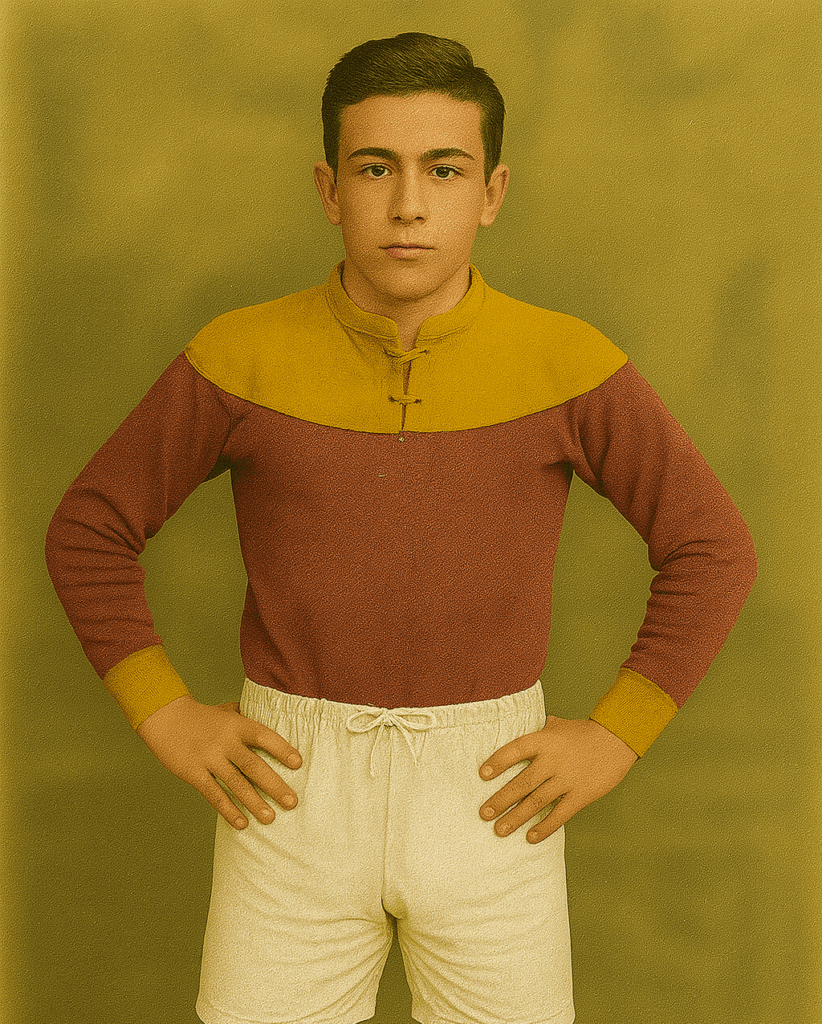
Claret and Amber arrives ! Motherwell FC Claret and Amber Yoke Kit 1913-1924
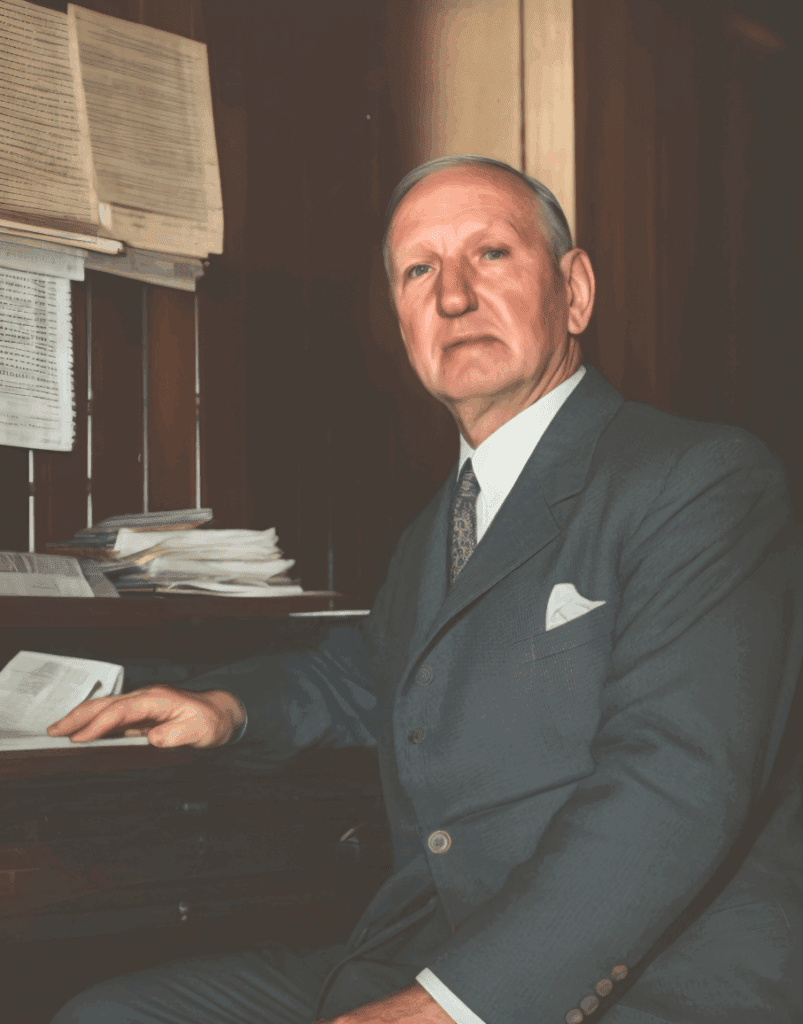
Mr John Hunter, Manager Motherwell FC 1911-46 & Club Secretary 1946-59 (MFC HT Collection)
The Birth of Claret and Amber (1913)
By 1913, another momentous change was on the horizon – the club’s colours. That year, Bradford City were the only senior club wearing claret and amber, but the style caught the eye of the Motherwell board. A motion to change colours was tabled by director Mr Bowman, and it passed.
The new kit, designed and produced by a Bradford firm, featured a claret jersey with an amber yoke and white knickers. On 23 August 1913, it was worn for the first time in a 1:1 draw with Celtic in front of 20,000 fans, generating record gate receipts of £500.
However, not everyone was impressed. A Glasgow Evening Times report remarked that the team looked “almost unrecognisable” in the new kit – and then questioned if their poor performance in a 5:0 loss to Clyde meant it was the reserves in disguise. Still, the colours stuck. This was the birth of Motherwell’s iconic claret and amber identity.
The War Years & Fallen Heroes (1914–1917)
The outbreak of World War I inevitably impacted every aspect of British life – including football. Players left the game to serve; some never returned.
Among the most tragic stories was that of Frank David Kelly, son of Celtic legend James Kelly. Frank had played for Motherwell from 1915, making over 80 appearances. He joined the 9th Cameronians (Scottish Rifles) and later served in France. On 5 May 1919, after the war had ended, Frank died in a railway accident near Loiret. He was just 26.
By 1917, the club was still competing, still fielding teams – even if line-ups often included guest players and wartime loanees. The legendary Willie Rankin, signed from Junior club Parkhead, would go on to become one of the club’s most significant figures in the years ahead.
The Roaring Twenties and Daring Tours (1922–1930)
The 1920s was a decade of transformation and quiet ambition for Motherwell. In 1922, The Motherwell Football Handbook was first published by D.J. Love, “Standard” Office, Motherwell, an early indication that the club was stepping into its own with an identity worth chronicling. That same year, in a spirited charity match in Shettleston, the Steelmen edged out Partick Thistle 2:1, in front of a modest crowd paying a shilling for adults and sixpence for boys. These events, while humble, were harbingers of a club beginning to stretch beyond its Lanarkshire roots.
The 1924–25 season marked a key milestone with goalkeeper Allan McClory making his debut against Ayr United. McClory would go on to guard the net with distinction for many years, establishing himself as one of the most reliable Scottish keepers of the era.
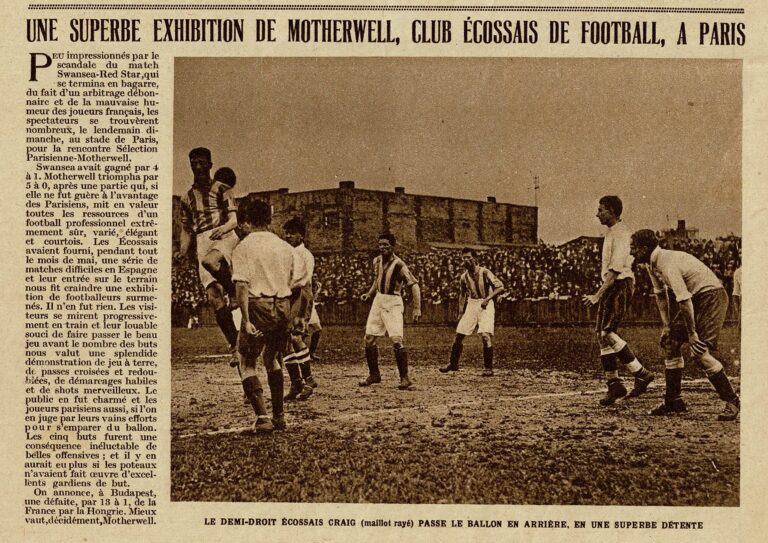
Le Mirroir des Sports, 14 June 1927, reports on “A Superb Exhibition in Paris by the Scottish Football team, Motherwell. (Club Historian’s Personal Collection)
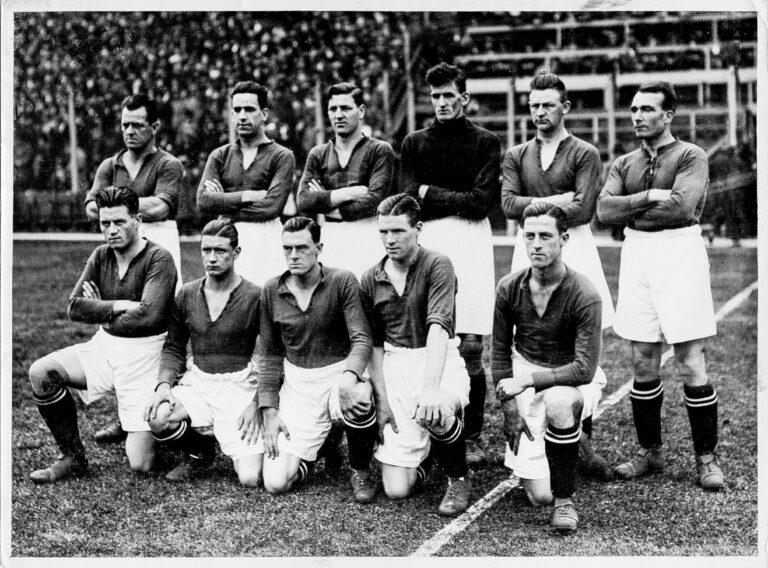
2 June 1928 Motherwell v Argentine Amateurs Football Association, played at Boca Juniors Stadium. Motherwell won 3-0. (Club Historian’s Personal Collection )
By the mid-1920s, John Hunter’s side had begun to dream on a continental scale. The 1926–27 tour of Spain and Paris was more than just a footballing venture – it was a diplomatic and cultural statement. ‘Well faced Spanish giants including Real Madrid and Barcelona, drawing the latter 2:2 in front of 22,000 at Les Corts. Mr. Hunter’s observation in his notes: “Barcelona is the best club we have met”, underscored the growing respect between clubs across Europe. These were no mere friendlies; they were contests of style, stamina, and strategy.
That tour culminated in an extraordinary achievement. On 17 May 1927, at Estadio Chamartín, Motherwell defeated Real Madrid 3-1 to win a special edition of the Copa del Rey, presented by King Alfonso XIII himself. While the domestic edition was simultaneously won by Real Unión, this international honour – The King of Spain Cup – cemented Motherwell’s reputation as Scotland’s continental pioneers. A week later, they added the Barcelona Cup, beating Swansea City 1–0 after a thrilling 2-2 draw with Barcelona.
This globe-trotting attitude reached its zenith in summer 1927 with a daring expedition to Argentina, Brazil and Uruguay. Thirteen matches, played across three football-mad nations, provided spectacle and heartbreak in equal measure. Though the tour ended in a 5:0 thumping by a Brazilian select side (played so close to the ship’s departure the players travelled to the docks in their kits), the adventure had lasting consequences. Not least, it earned the admiration of the Argentine authorities, who in 1946 would send Motherwell a full set of jerseys – though accidentally reversing the claret and amber design, giving the reserve team a rather unfamiliar look for a season.
Importantly, the tour was a financial triumph, raising £12,800 and giving John Hunter the means to reshape the squad, plundering the dying Intermediate League for talent. These shrewd acquisitions laid the foundation for the club’s coming golden age.
Details of individual player’s wage details or contract negotiations were not usually recorded in the club’s minute book, unless it was a request during the playing season to either retain, sign-on or offload a player that required a board of directors’ discussion and agreement.
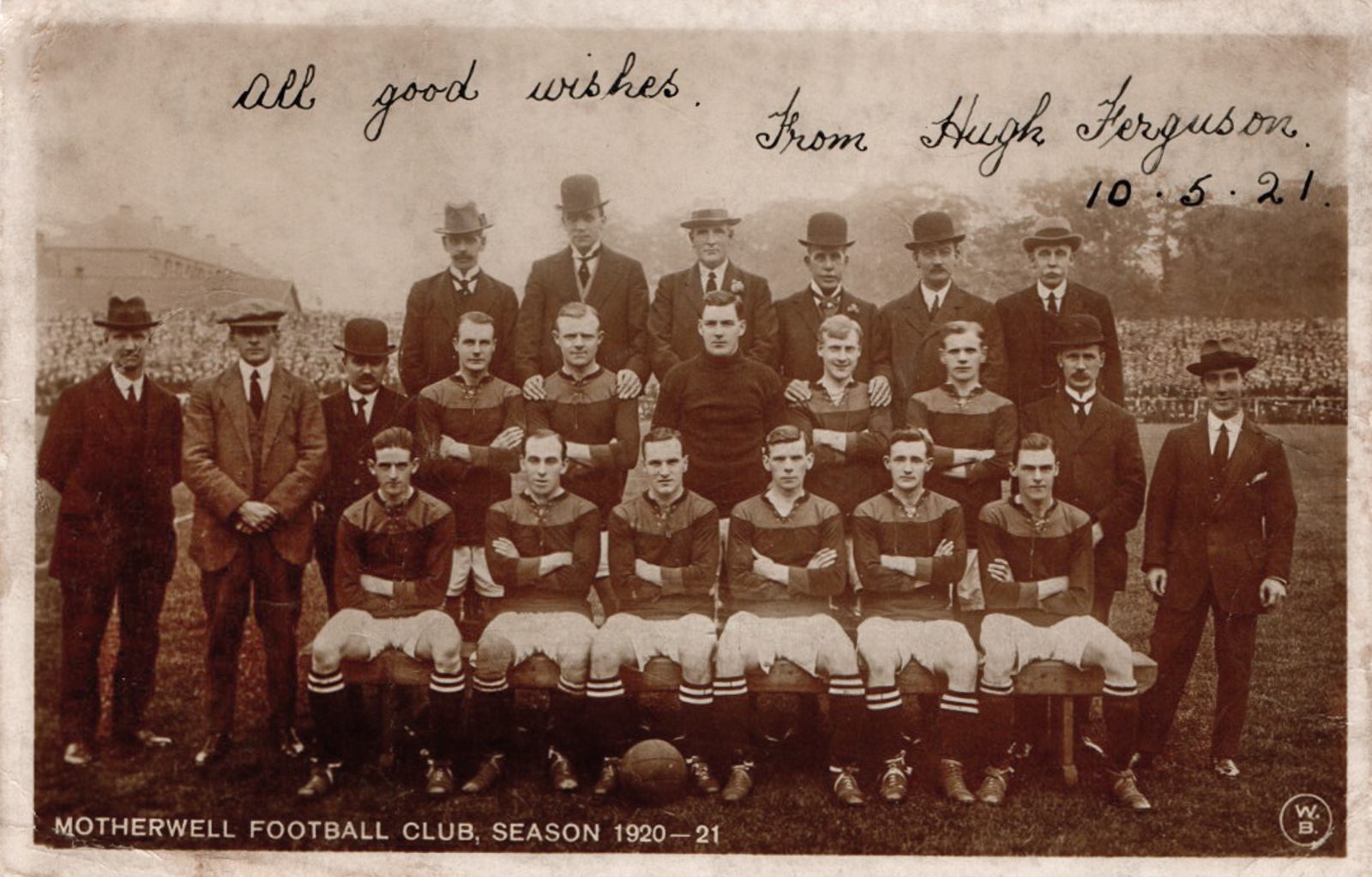
10 May 1921, Motherwell FC team photo, signed by Hugh Ferguson - with ball at his feet. (Club Historian's Personal Collection)
However, in the summer of 1924, there is an interesting entry authorising the Secretary to offer the majority of re-signed players for the incoming season, a £3 basic weekly wage and a £1 bonus, if selected to play. There were to be a few exceptions to this structure, including Hugh Ferguson, Bobby Ferrier, Craig Brown & Willie Rankin, who were offered a basic wage of £5 per week, but without the playing bonus of £1.
Another entry in the minutes on 16th November 1925 confirmed that two cheques had been received from Cardiff for Hugh Ferguson, totalling £5,000, postdated to be payable as £3,000 immediately and £2,000 in January 1926. Hugh Ferguson himself received a personal payment from Motherwell FC of £585 as part of the transfer agreement
From Flair to Fortress: The Early Thirties
The 1928–29 season saw another stylistic evolution as the club adopted the now-iconic claret band across the amber shirt. South American influence continued to ripple through Fir Park’s fashion sense, and vertically-striped shirts gifted by the Argentines in 1946 would serve as alternate kit.
By 1929, something special was brewing. A 2:0 home defeat to Hearts on 7 September would prove to be Fir Park’s last for three years – a staggering show of consistency. On 26 April 1930, Motherwell demolished Queen’s Park 9:0, with all proceeds going to honour loyal striker Willie MacFadyen, who was fast becoming a legend in his own right.
The club reached its first Scottish Cup Final in April 1931, losing 4-2 to Celtic in a replay after a 2-2 draw in the initial game.
MacFadyen’s influence was growing, and his goals would power the side towards greatness. In the summer of 1931, the club embarked on a triumphant South Africa tour, winning 14 of 15 matches – beating Natal 6:0 on 25 May and losing 3:1 in June.
Back home, George Stevenson was starring on the international stage. His goal against England on 28 March 1931 in a 2:0 win was a moment of national pride as his club form mirrored his international success.
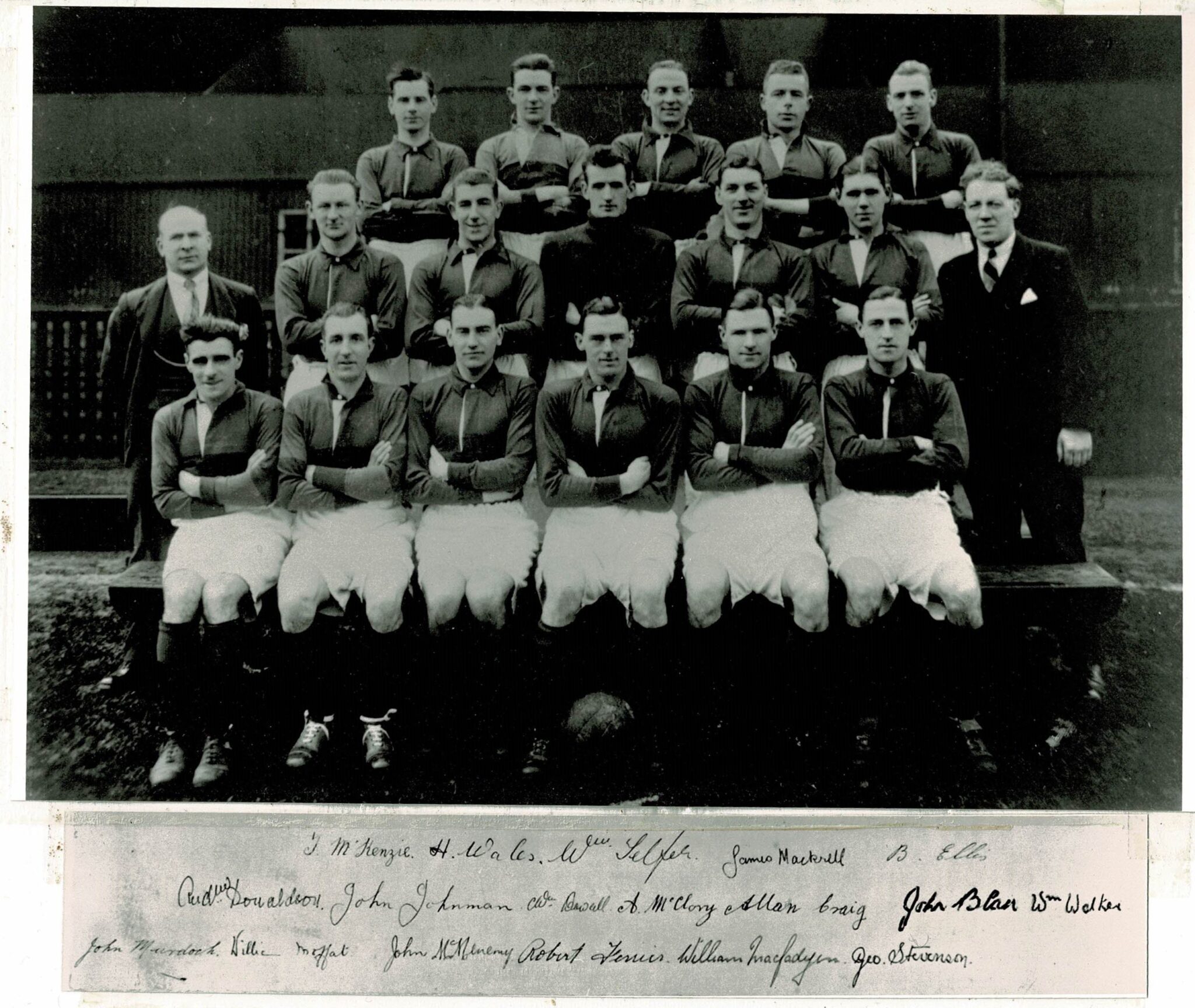
1931-32 Scottish League Champions, Motherwell FC (MFC HT Collection)
Champions of Scotland (1931–32)
Everything culminated on 16 April 1932. A 3:0 win over Cowdenbeath at Fir Park clinched the Scottish First Division Championship for the first – and to date, only – time. It was a monumental achievement, built on the relentless scoring of players like Sodger Watson, who bagged 55 goals the season prior and continued his scoring spree into 1931–32.
The new season began in style. A new flagpole, eight feet taller than the last, was erected on the main stand’s north end. On 13 August 1932, before 12,000 supporters, the League Championship flag was proudly unfurled by the wife of Chairman Tom Ormiston. The match ended in a 3:3 draw with Kilmarnock, but the symbolism of the moment far outweighed the result.
Yet amid the glory, there were sombre moments. John Henderson, the club’s first professional goalkeeper signed on 28 June 1893, passed away in July 1932. A link to the earliest professional days of the club was lost, but his memory endured.
Motherwell continued to break ground off the pitch as well. In 1933, a Ladies Only room was opened at Fir Park in response to the growing number of women attending matches – a progressive step that reflected both the club’s community ethos and the changing face of Scottish football fandom.
Steelmen in Silver and Song (1933–1936)
The next few seasons brought both honours and heartaches. In 1933, Motherwell were invited to compete for the prestigious Rosebery Charity Cup, reaching the final before succumbing to Hearts at Tynecastle. The Edinburgh club’s colours – primrose and pink – draped the stands, and Lord Rosebery’s son himself handed over the trophy, in a scene filled with Victorian pomp and Scottish pride.
April 1933 saw the club reach its second Scottish Cup Final, only to lose to Celtic again in a 1:0 defeat.
Further glory came in 1934 with another South African tour, this time sweeping all before them – 16 wins from 16, scoring 81 and conceding just 12. MacFadyen again starred, netting six in one Test match and a whopping 33 goals in total. The club returned to Lanarkshire with their status as international ambassadors of the Scottish game well and truly secured.
Meanwhile, tales of Motherwell’s impact abroad filtered back home. The Malvern Bowling Club in Johannesburg, so taken by the team’s colours, requested a flag to fly over their new green. John Hunter duly obliged, and the claret and amber fluttered proudly in South African sunshine – a quiet but poignant testament to the club’s far-reaching legacy.
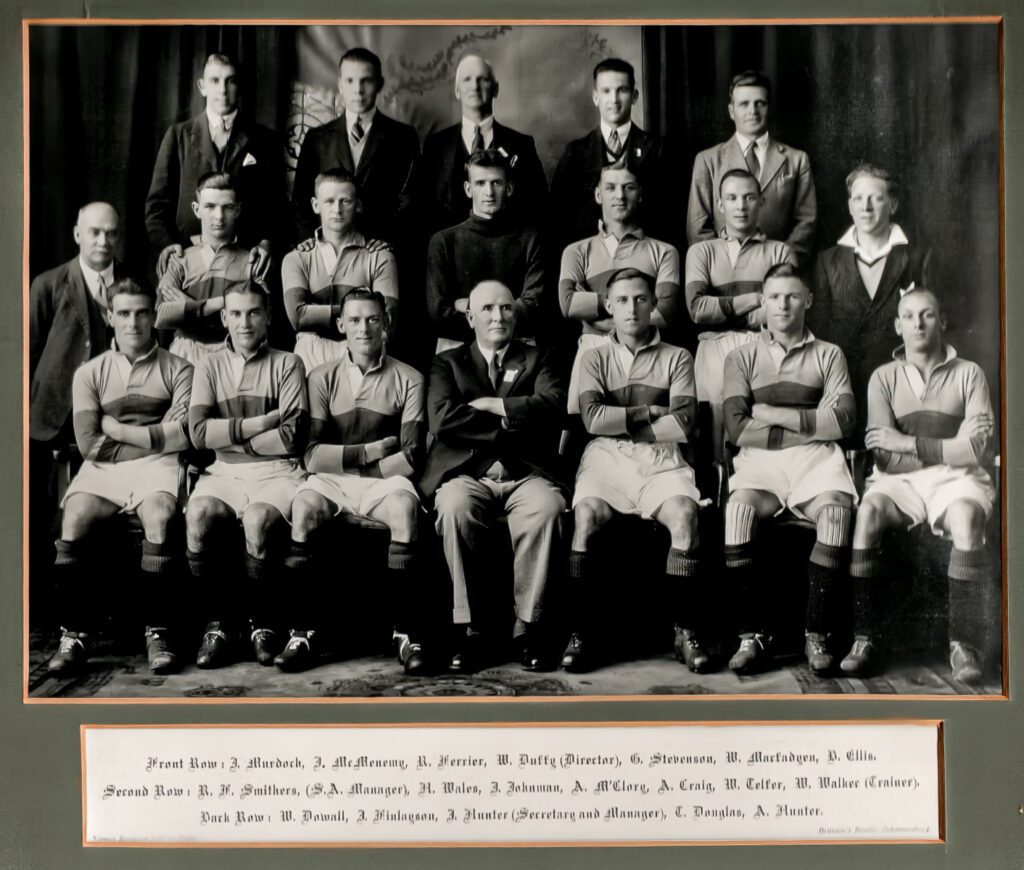
Motherwell FC 1931 Tour of South Africa (MFC HT Collection)
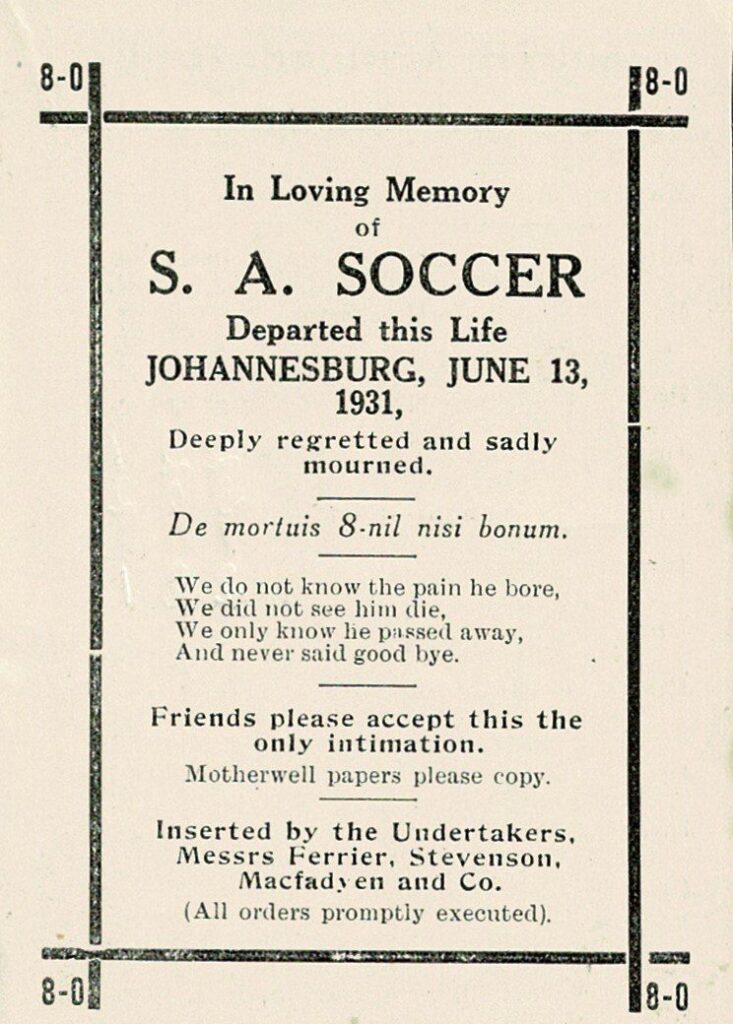
1931-32 MFC Handbook -humorous skit on Motherwell's 8-0 win in the 2nd test match (Club Historian Personal Collection)
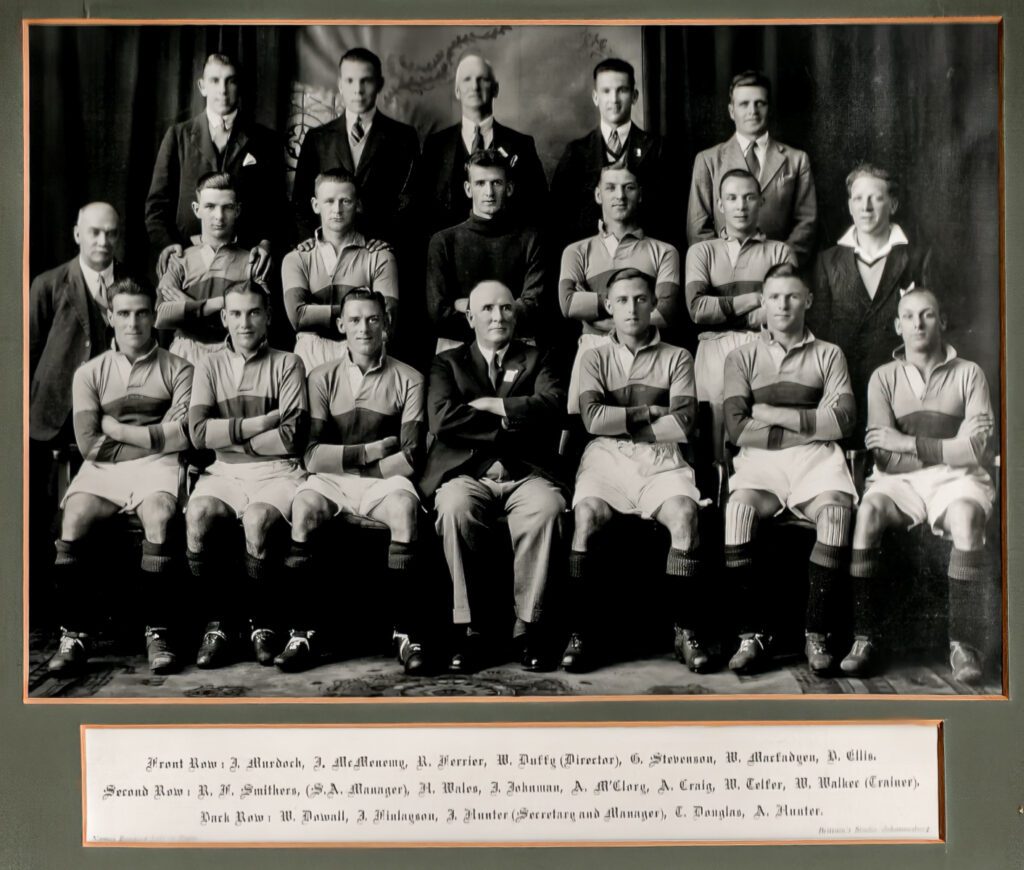
Motherwell FC 1931 Tour of South Africa (MFC HT Collection)
A legacy of the South Africa tours is what’s known as the “Motherwell Style”. This is characterised by a focus on shot passing, quick movement, and a well-organised, compact team structure – which was particularly impactful because it contrasted with more traditional long-ball style that some South African teams used at the time. To this day, this style is still played and continues to be known as “Motherwell Style”.
The Late Thirties: Triumphs, Tragedies, and Transition (1936–1939)
As the 1930s progressed, Motherwell continued to carve out a place of significance in Scottish football, though not without its setbacks. The 1936–37 season marked a high point in terms of attendance, with a record 36,500 fans packing Fir Park for a Scottish Cup clash against Celtic on 24 March 1937. Though the Steelmen narrowly lost 2-1 in a tense encounter, the gate receipts of £2,043 proved that Motherwell had cemented itself as a major force in Scottish football, with crowds flocking to watch their exciting, attack-minded football.
A week later, the disparity between big-match glamour and the everyday realities of Scottish football became all too clear when Arbroath visited Fir Park. The gate receipts totalled just £22 – a far cry from the Celtic match, underscoring the unpredictable nature of the game. It was a reminder that football in those days could be as volatile as it was thrilling.
But the season would end on a high note for the club, as they faced Celtic once again on 30 April 1937. This time, Motherwell triumphed with a resounding 8:0 victory. Centre-forward Alex Stewart was the star of the show, scoring an astonishing six goals in a single match – a feat that would go down in Fir Park folklore. It still stands as Celtics biggest defeat. It was a fitting conclusion to a season that had showcased the club’s attacking prowess and the individual brilliance of its key players.
As the 1930s drew to a close, the club experienced several poignant moments off the field. On 10 May 1937, former winger George Clarke Robertson, who had made history as the first Motherwell player to be capped for Scotland, tragically passed away in Providence, Rhode Island. His death marked the end of an era, as Robertson had been a key figure in the club’s early 20th-century successes, including his celebrated appearances for Scotland during the 1909-10 season.
Moreover, the 1937–38 season saw the passing of Alexander Muirhead, a former director and ex-Baillie of Motherwell, whose contributions to the club were widely respected. Muirhead had even joined the team on the 1934 South African tour. His death at the age of 79 served as a reminder of the intertwined relationship between the club and the town of Motherwell itself.
Additionally, Tom Ormiston, the chairman of Motherwell FC since 1931, also passed away in January 1937, leaving behind a legacy of stability and growth during a critical period in the club’s history. His successor, Harry Thomson, would inherit a club with a firm foundation, but one that was bracing itself for the upcoming challenges of the 1940s.
The Eve of War: Surging Forward and Preparing for Change (1938–1939)
With the outbreak of war on the horizon, the 1938–39 season was a time of both achievement and reflection for Motherwell. The 27 August 1938 clash against Kilmarnock proved to be a notable highlight, with Motherwell claiming a 5:3 victory. The match saw Ben Ellis, a full-back known for his versatility, scoring a remarkable three penalty kicks – a feat that would be remembered by supporters for years to come. Ellis would go on to win the Scottish Professional Snooker Championship in January 1941, further cementing his status as a club legend who made his mark both on the football field and beyond.
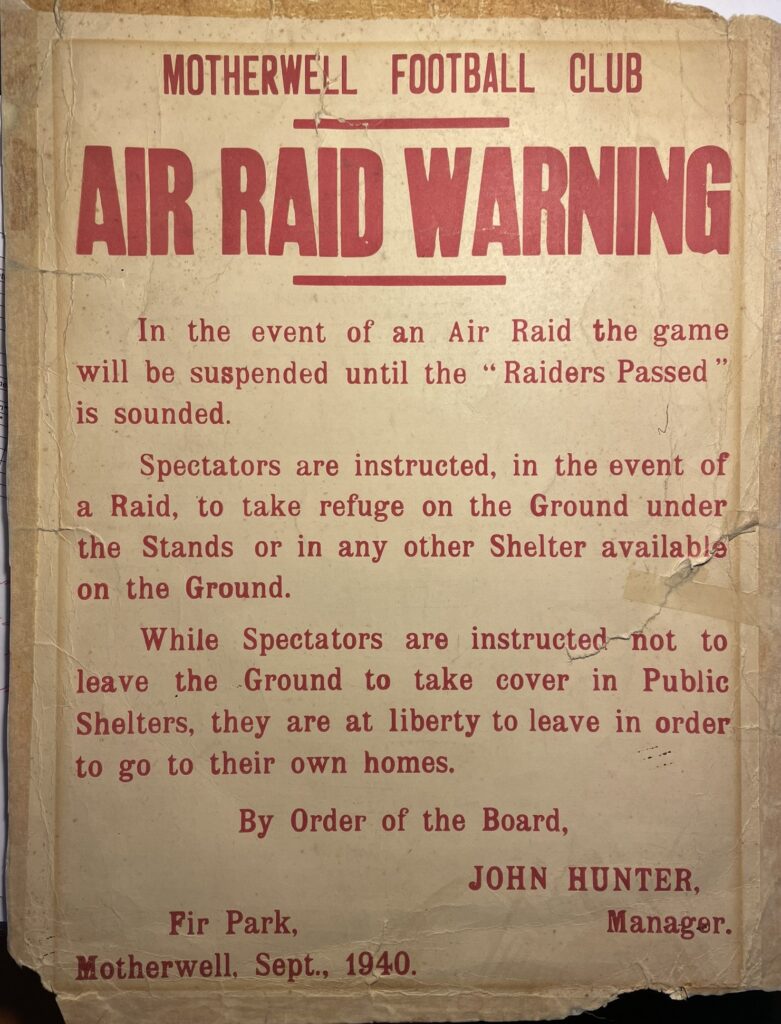
During World War Two, this notice was on display at Fir Park. (Club Historian Personal Collection)
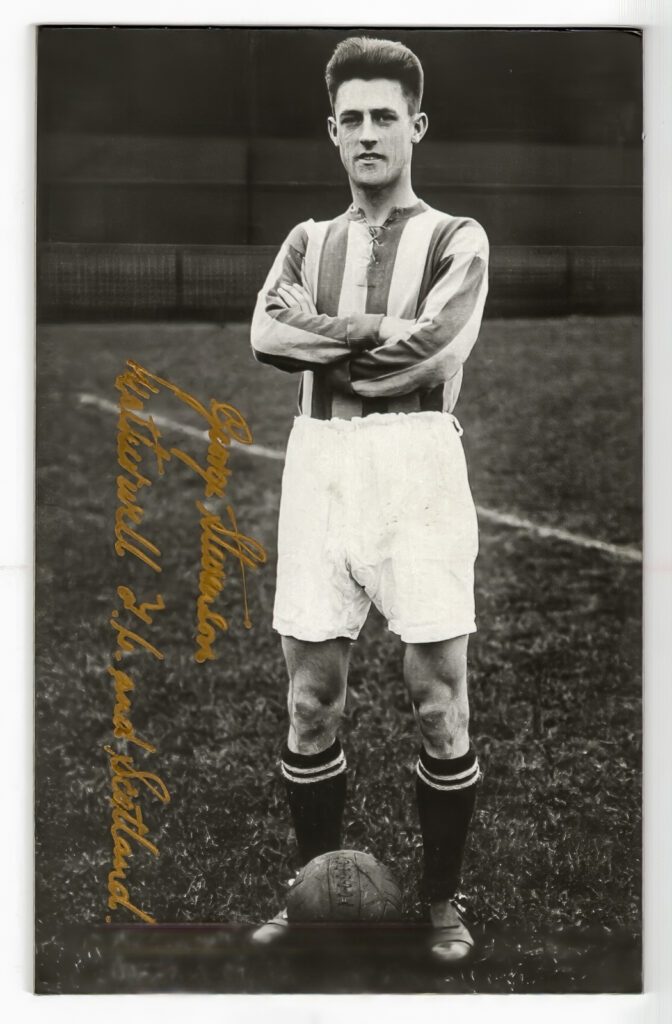
From May 1923 - August 1939, George 'Steevie' Stevenson made over 550 appearances for the club, scoring 197 goals.(Club Historian Personal Collection.)
That season, the club also experienced an unusual consistency in the Scottish Cup, as the same 11 players featured in all seven matches, including the 1939 final, where Motherwell lost to Clyde. This consistency reflected the strength and unity of the team, with Murray, Wales, Ellis, McKenzie, Blair, Telfer, Ogilvie, Bremner, Mathie, Stevenson, and McCulloch forming a settled and formidable core.
Off the pitch, the club was making efforts to future-proof itself for the challenges ahead. In 1939, Willie Kilmarnock was signed from Irvine Meadow—a move that would strengthen the team as they prepared for the inevitable disruptions caused by the Second World War. However, the onset of the conflict would quickly reshape the landscape of Scottish football, as many clubs, including Motherwell, would face considerable challenges due to the war effort and the conscription of players.
The War Years and Resilience (1940s)
When World War II broke out in 1939, the football world, like so many aspects of society, was turned upside down. With many of the club’s star players enlisted to serve, Motherwell had to adapt to a new, uncertain environment. However, the club proved resilient, not just in continuing to play competitive football during these tumultuous years but also in finding ways to keep spirits high and maintain its status in the Scottish game.
In 1944, amid the chaos of the Second World War, Motherwell won the Summer Cup, defeating Clyde 1:0. It was a hard-fought competition, played during a time when Scottish football had been significantly disrupted by the war, but it was a testament to the club’s enduring strength. In earlier rounds, they triumphed over Hamilton Accies (3:1 on aggregate), St Mirren (6:3), and Falkirk (3:2), showcasing the depth and determination of the squad.
In that same year, they faced a Polish Army Select team in an exhibition match. A thrilling 6:5 victory added another chapter to Motherwell’s wartime exploits, a reminder that even in the darkest of times, football could still provide joy and hope.
Looking Beyond the Horizon
As the 1940s wore on, the post-war years promised new challenges but also the potential for a revitalised Motherwell FC. With the conclusion of the Second World War in sight, the club, much like the country itself, would need to rebuild, reintegrate, and find its way back to the heights of competitive football. Players and staff alike had endured a period of great sacrifice, but football’s power to unite, to provide escapism and hope, would ensure that Motherwell FC remained a beacon of pride for its supporters.
From the 1926-27 to 1933-24, Motherwell ended each season in the top three, champions in 1932-33.
The memory of John Hunter’s successful tours and the club’s international ventures were etched into the history of Motherwell, creating a legacy that would carry them forward into a new era of Scottish football – one that would see them rise to new challenges and opportunities as the game began to recover and evolve in the post-war period.
Discover the next era: The Golden Age 1946-1964